
How to Furnish and Design a Co-Living House That Rents Fast
Where to spend, where to save, and the details that get a room booked and renewed
Furnish a co-living house by treating each private room like a small hotel room and each shared space like the reason people chose the house. Budget roughly 2,500 to 6,000 dollars per bedroom, put most of it into beds, seating, and the kitchen, and buy for durability over the photo. A room that looks good and holds up rents fast and rents again.
I furnish every house in my portfolio to the same standard, because in mid-term rentals the feel of the space matters more than the square footage. Here is where I spend, where I save, and the small things that decide whether a room sits empty or gets renewed.
What does it cost to furnish a co-living house?
Plan on roughly 2,500 to 6,000 dollars per bedroom, depending on how nice your market expects the house to be. For a whole three-bedroom, a mid-range furnishing usually lands somewhere around 18,000 to 35,000 dollars once you count the shared spaces, and a budget build can come in under that. A rough split that works: about 55 to 60 percent on furniture, 20 to 25 percent on appliances and electronics, and the rest on linens, decor, and basic safety gear.
Treat furniture as a recurring cost, not a one-time purchase. Beds and sofas wear out on a schedule, faster in a house with turnover, so budget to replace pieces every year rather than assuming you buy once and forget it.
Design the private room like a small hotel room
The private bedroom is what they are actually paying for, so make it feel complete and calm. That means a real, comfortable bed, not the cheapest frame you can find, blackout curtains, a nightstand with a lamp and a charging outlet, a small desk or work surface, and enough storage that they can unpack and stay a while.
Aim for a room someone would be happy to sleep in on a business trip. Clean lines, warm light, one or two nice touches, and nothing broken or wobbly. You are not decorating a magazine spread. You are making a stranger feel at home fast.
The shared spaces are where you win or lose
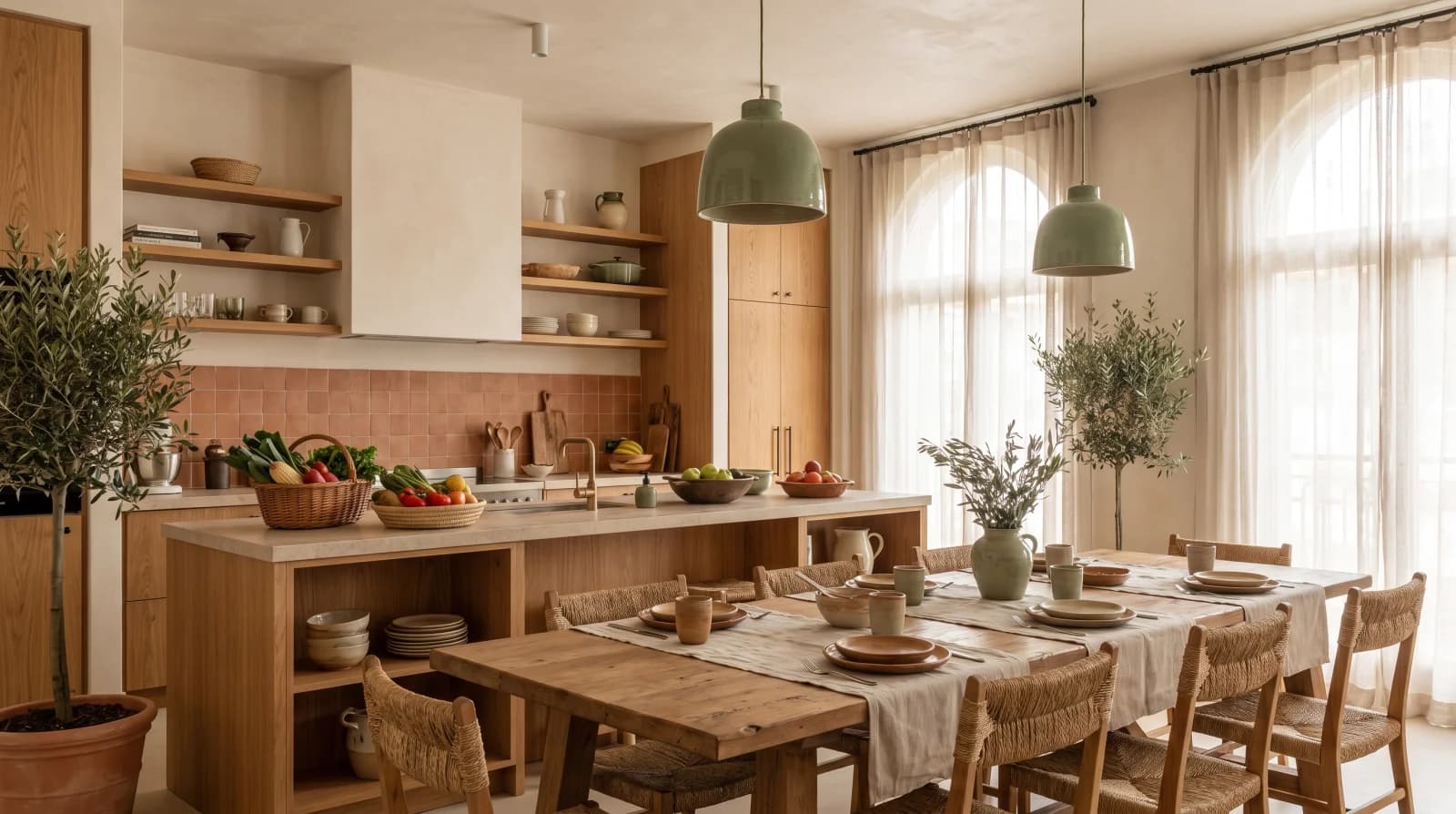
Residents tour the private room, but they judge the house on the kitchen and the living room. A shared kitchen that is well equipped and pleasant to cook in, and a living room with enough real seating that everyone is not stuck in their bedroom, is what separates a house people stay in from one they leave.
Spend real money here. A solid dining table that seats everyone, a couch that fits the number of residents, good lighting, and a kitchen stocked with the things people actually use. When the shared space works, residents stay longer and refer their friends, which is the cheapest marketing you will ever get.
The furniture budget, room by room
A rough per-space guide for a mid-range co-living house helps you allocate without overspending in one place and starving another.
- Each bedroom: roughly 1,200 to 2,500 dollars for bed, mattress, nightstand, lamp, desk, and storage.
- Living and common areas: the biggest single line, since seating, a table, and lighting carry the house.
- Kitchen and dining: cookware, dishes, small appliances, and a table that seats the full house.
- Each bathroom: a smaller line for storage, a mirror, and the fixtures a shared bath needs.
Put your money into the pieces people touch every day. The bed, the couch, the mattress, the kitchen. Those are the things a resident feels, and the things a cheap version of will cost you in early move-outs.
Buy for durability, not the photo
Your furniture has to survive strangers and turnover, so buy for wear. Washable, darker-toned upholstery hides life better than a white linen couch. Solid wood and metal outlast particle board that wobbles apart after the second move. Mattress protectors and stain-resistant fabrics save you replacing things every year.
The instinct to buy the prettiest option is the one to fight. A room that photographs well but falls apart in six months costs you more than a plain room that holds up for five years. In this business the durable choice is almost always the profitable one.
The details that get you booked and renewed
The small things are what tip a booking your way and keep a good resident from leaving. None of them cost much.
- Fast wifi, which is closer to a utility than an amenity for remote workers and nurses.
- Real blackout in the bedrooms, so shift workers and early risers actually sleep.
- Enough outlets and USB charging near the bed and the desk.
- In-unit or on-site laundry, which many mid-term guests treat as a requirement.
- A stocked kitchen, so they can cook the night they arrive.
- Labeled, secure storage so residents are not living out of a suitcase.
What to skip
Do not spend on things that photograph well and do nothing. Fragile decor, delicate rugs, and anything you would be upset to see damaged do not belong in a shared house. Skip the trendy pieces that date fast. And do not over-personalize, because a room that feels like your taste is harder to rent than a clean, neutral one that lets a resident picture their own life in it.
Furnishing is the last big step before you list. If you are working the whole process from the start, the full sequence is in how to start a rent-by-the-room business.
Want a furnishing plan that pays for itself?
Room Rental Riches includes the furnishing lists, the per-room budgets, and the durability picks I use to set up a co-living house that rents fast and holds up. If you are about to furnish your first property, book a free discovery call and we will build the plan against your budget.
Book a free discovery call at benicehospitality.com