
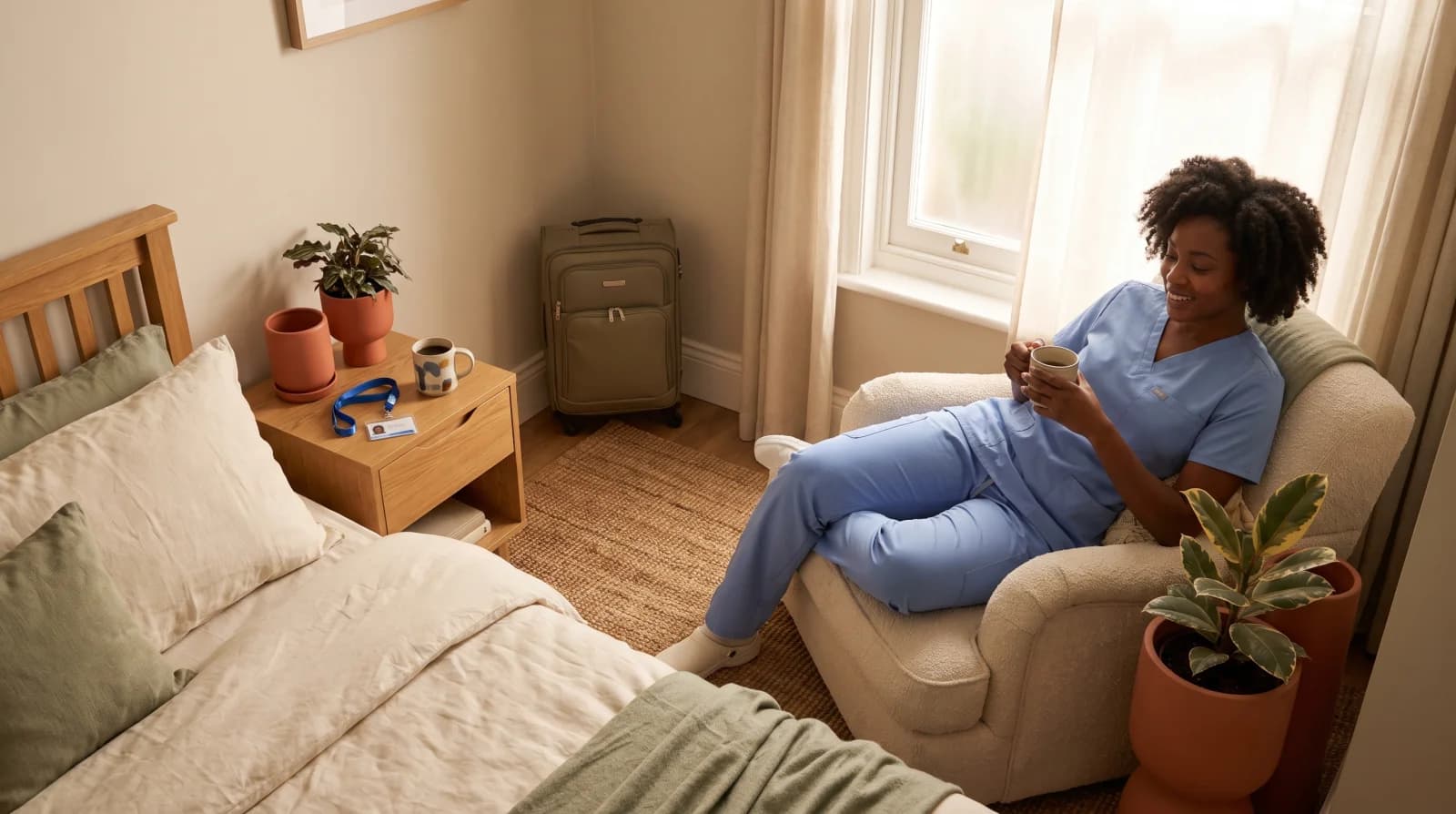
Co-Living for Travel Nurses: The Mid-Term Rental Play for Operators
Why healthcare travelers are one of the steadiest tenants a co-living operator can fill a room with
Travel nurses are one of the best tenants a co-living operator can target. They book furnished rooms for 13 weeks at a time, they arrive with a housing stipend built into their pay, and they need a place near the hospital that is ready to live in on day one. That is a furnished mid-term room, which is exactly what a co-living house rents.
I fill rooms with healthcare travelers in my own portfolio, and they are some of my most reliable residents. Here is why the fit works, what they actually pay, and how to set a room up so a nurse picks yours over the one down the street.
Why are travel nurses a good fit for co-living?
Travel nurses need three things that co-living already provides. A furnished room they can move into without buying anything, a lease measured in weeks and months instead of a year, and a location close to the hospital where they are contracted. A standard 12-month unfurnished apartment fails all three. Your co-living room passes all three.
The contract length is the quiet advantage. A typical travel assignment runs 13 weeks, and many nurses extend or take a second contract in the same city. That gives you a resident who stays a full quarter or longer, which is far easier on your turnover math than a string of short stays.
What do travel nurses actually pay?
Travel nurses come with a housing stipend that usually runs from about 1,200 dollars a month in lower-cost areas to 4,000 or more in expensive cities. Furnished rooms and units marketed to them commonly rent between 1,500 and 4,500 dollars a month depending on the market, with high-demand cities at the top of that range.
The stipend is the part that matters for you. It means a big share of your rent is effectively pre-funded by the nurse's contract. They are motivated to keep their housing cost at or under the stipend, so a clean furnished room priced sensibly against that number is an easy yes for them.
How the 13-week contract changes your turnover math
A 13-week booking is roughly a quarter of the year in one placement. Compare that to a stream of two and three-week stays that leave gaps between them. Fewer turns means fewer cleanings, fewer re-listings, and fewer empty nights, which is where co-living margin usually leaks. I covered why turnover decides profitability in co-living versus traditional renting.
The extension is the bonus. A nurse who likes the room and renews for a second contract gives you six months of continuous rent with a single move-in. Court that. A resident who renews is worth more than two who do not, because you skip the whole cost of turning the room.
What travel nurses need in a room
Set the room up for someone who works long shifts and sleeps at odd hours. The essentials are not complicated, but missing one of them loses the booking.
- Fully furnished, down to the kitchen basics, so they arrive with a suitcase and nothing else.
- A genuinely dark, quiet bedroom, because a night-shift nurse sleeps during the day.
- Reliable, fast wifi, since a lot of charting and life admin happens online.
- Simple parking, ideally off street, for someone driving to a hospital at shift change.
- Flexible, weeks-based lease terms that match a 13-week contract, not a 12-month one.
- In-unit or on-site laundry, which is close to non-negotiable for scrubs.
Where to list for travel nurses
List where healthcare travelers actually look, which is the furnished mid-term rental sites, not the annual-lease boards. Furnished Finder is the one most travel nurses check first, because it was built around exactly this tenant. Round it out with the general mid-term platforms and a direct listing you control.
Write the listing for the nurse. Name the hospitals you are near and the drive time, state that the term is flexible and furnished, and spell out that utilities and wifi are included. The nurse is comparing a dozen rooms fast between shifts. The one that answers their questions before they ask wins.
The risk: seasonality and competition
Two things can bite you. Travel assignments ebb and flow, so demand is not perfectly even across the year, and the furnished-room market has gotten more crowded as more operators chase the same tenant. Do not underwrite a house on travel nurses alone at peak rates.
The fix is to stay open to the wider mid-term pool. Remote workers, relocations, and traveling professionals in other fields want the same furnished flexible room. Position for the nurse, but keep the room appealing to any 30-day-plus guest so a slow month in one channel fills from another.
How to position your co-living house for healthcare workers
If you are near a hospital, lean into it. Keep at least one room permanently set up as a travel-nurse room, dark and quiet with fast wifi and flexible terms, and build a little reputation with the traveler community in your city. Nurses talk to each other. A clean, honest, well-run room gets passed along by name, and referrals cost you nothing.
This is the same operating discipline the whole model rewards. If you are still building the house itself, start with how to start a rent-by-the-room business.
Want to fill your rooms with steady mid-term tenants?
Room Rental Riches teaches how to position, price, and list co-living rooms for the mid-term guest, including the healthcare travelers who renew and refer. If you have a house near a hospital and want to build it around this tenant, book a free discovery call and we will map it out.
Book a free discovery call at benicehospitality.com